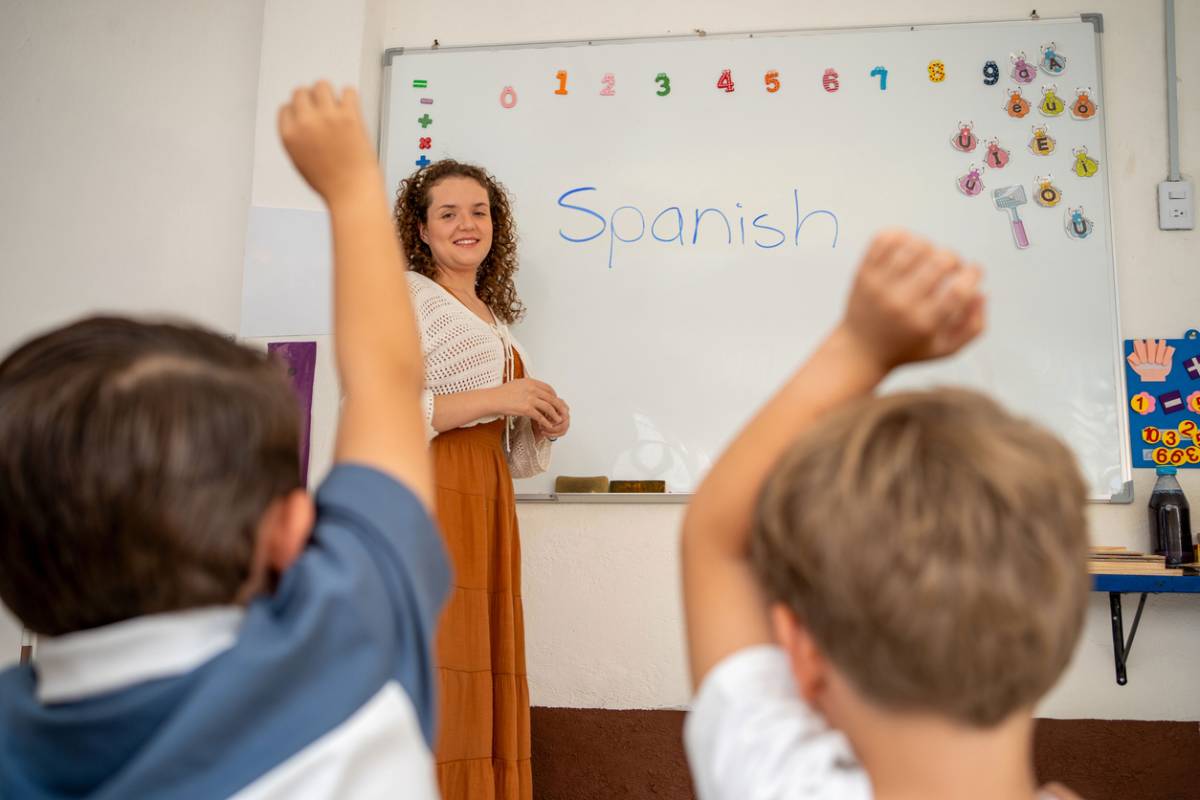
Children pick up so much in their early childhood. From words to mannerisms, they are literally sponges for new information. Young children absorb new information with ease, especially in language. The early years are a unique time for children to soak up other languages and cultural exploitation through Spanish. So, is early childhood the best time to introduce a second language? Below you will find helpful information on why you should consider helping your child become bilingual.
Is Early Childhood Is the Best Time to Introduce a Second Language?
Children do not learn language the same way adults do. They absorb information because their brains are uniquely wired to learn a second language. They can do it much more quickly and with ease at a young age. In fact, research worldwide indicates that learning another language at an earlier age is ideal.
Language Acquisition in Early Childhood
Researchers have long studied the best time to introduce a second language. The critical period for language learning is generally from birth to age seven. This window in early childhood is when the brain is uniquely suited to absorb new languages. After this period, language learning becomes less natural and takes much more effort.
During the first few years of a child’s life, their ability to learn a new language is unparalleled. It is unlike any other period in their lifetime. The brain is highly plastic during this time. This means it can easily form new connections and neural pathways. If you want your child to be bilingual, early childhood is the most opportune time.
Early Language Acquisition and Future Language Proficiency
Exposing your child to a second language in early childhood comes with lifelong benefits. It dramatically improves their language proficiency. It also makes it much easier to expand learning later on. Children who are regularly exposed to two languages absorb several benefits. This includes a more accurate accent and long-term fluency. It also comes with strong literacy skills in both languages.
Children can learn new languages later in life, but their accents are often less accurate. They also face more challenges with grammar. These challenges can deter many children. This is especially true if the second language is not often spoken around them. Early exposure at their child development center is critical for a second language to fully settle in the brain.
Why Introducing Your Child to a Second Language Matters
Introducing your child to a second language is about more than just knowing another language. It comes with several benefits that can improve your child’s development.
Stronger Cognitive Development
Learning two languages strengthens children’s thinking skills across the board. Research shows that cognitive growth increases when children learn a second language. This includes creativity and critical thinking skills. These benefits emerge early and persist throughout their lifetimes.
Improved Academic Performance
The benefits of bilingualism carry over into the classroom. This is true even when the subject is not the second language. Research shows that bilingual children tend to perform better across all academic subjects. The mental flexibility developed through navigating two languages supports overall learning.
Improved Social and Emotional Skills
Language learning is also about people and other cultures. When a child learns a second language, they gain a window into a different culture. This includes a different way of seeing the world. Bilingual children tend to be more empathetic and open-minded.
Child Development Center
Expanding your child’s learning through different languages is highly beneficial. If you are considering child development centers that incorporate language learning, contact the team at Children’s Journey today for more information!